University of Sydney · DECO3200
LumiBin
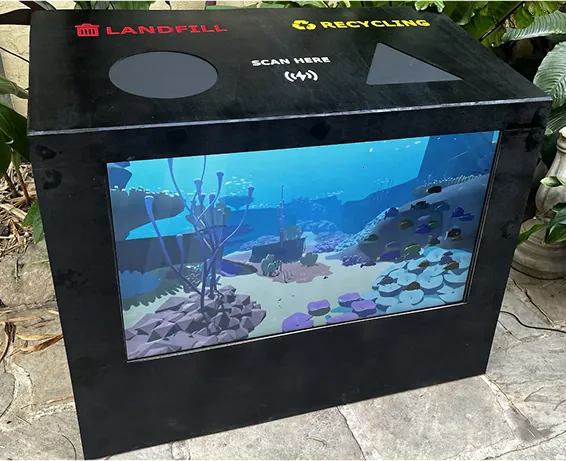
What is LumiBin? A public recycling interface that guides correct disposal in real time. By combining item scanning with animated visual cues, it reduces contamination by giving instant, non‑judgemental feedback at the bin.
- Outcome
- High Distinction finalist in the University of Sydney Design & Architecture Showcase.
- Role
- UX / UI Designer, Researcher, Prototype Builder
- Team
- Ned Benjamin + classmates
- Timeline
- One semester (research → concept → prototyping → final showcase)
- Methods
- Desk research · competitor reviews · field observation · surveys and interviews · in-situ prototype testing
- Skills
Problem space: from SDGs to recycling behaviour
The project was framed around the United Nations Sustainable Development Goals, focusing on SDG 12 (Responsible Consumption and Production) and SDG 14 (Life Below Water). We identified a key gap: Australians value recycling, but behaviour often falls short due to confusion, inconsistent systems, and “wish-cycling.” This contamination undermines the recycling system’s effectiveness.
Guiding question: How might we encourage correct recycling behaviour at the exact moment of disposal?
Research & discovery
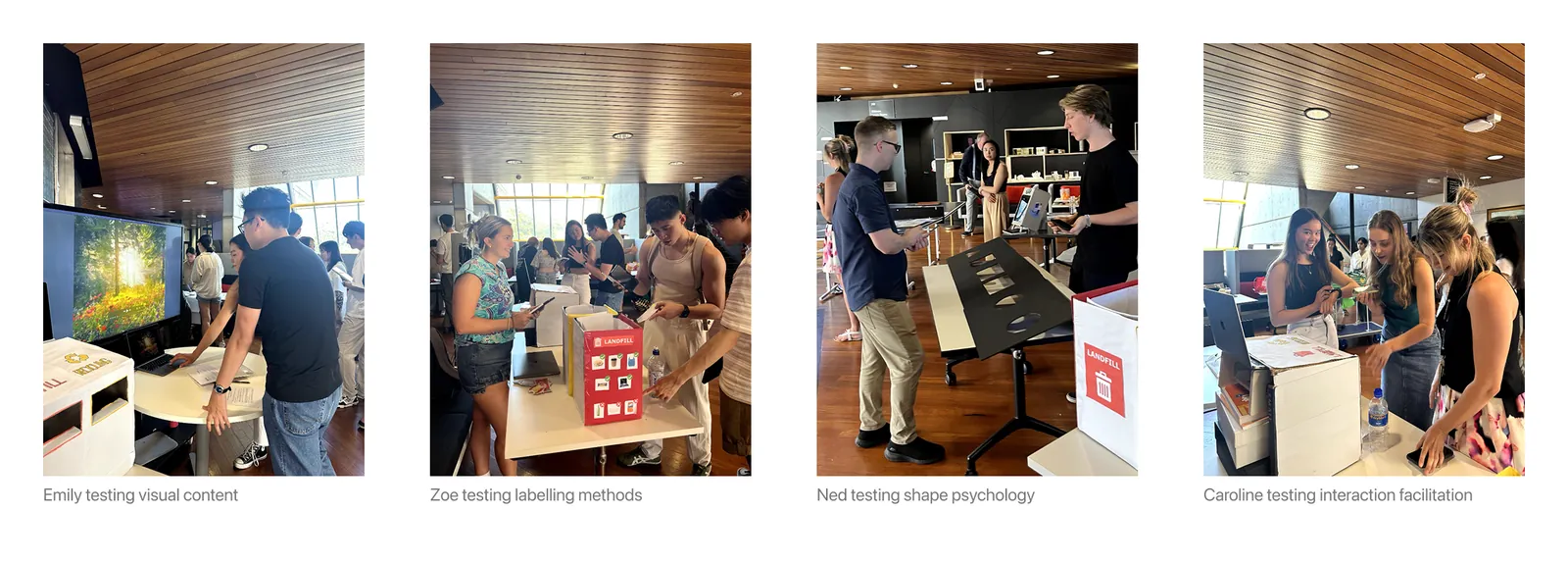
We combined desk research, competitor reviews across Sydney public spaces, field observations at campus and street bins, and surveys/interviews with students and residents. Rapid, in‑situ tests with mock signage and bin prototypes showed that users needed clear, immediate cues rather than dense text or punitive tone.
Insights: Users were often confident but wrong, signage was confusing, and people copied the person before them. What they needed were clear, fast, confidence-building cues — not dense text or shaming messages.
-
Awareness & behaviour
- Users are often unsure which bin to use in public spaces.
- Many throw everything into general waste to “play it safe.”
- People in a rush prioritise convenience over sorting correctly.
-
Pain points
- Inconsistent bin colours and labelling across locations causes confusion.
- Bins are frequently contaminated with the wrong materials.
- Lack of clear feedback means users don’t know if they recycled properly.
-
Motivations
- Desire to reduce waste and act sustainably in daily life.
- Social pressure — users don’t want to be seen “doing it wrong.”
- Students and young adults are especially motivated by environmental impact.
-
Opportunities
- Use light or sound cues to guide correct bin usage instantly.
- Make public bins more intuitive through universal colours and icons.
- Provide real-time feedback to reinforce positive recycling behaviour.
- Gamify recycling in public spaces to engage groups and communities.
Development stages
Stage 1 — Defining the problem
We mapped pain points and experimented with signage, bin labels, and hole shapes to see what affected behaviour.
Stage 2 — Concept exploration
From several concepts, we selected the “Oracle Bin”, refined into LumiBin. The idea combined physical cues with a reactive screen to guide and reward correct recycling.
Stage 3 — Mid-semester prototyping & testing
We tested:
- Screen content: motion graphics outperformed statistics-heavy screens.
- Feedback tone: objective, encouraging messages improved speed and accuracy without shaming.
- Bin hole shape: a distinct triangle for recycling was most intuitive.
- Labels: icons + text beat text-heavy posters.
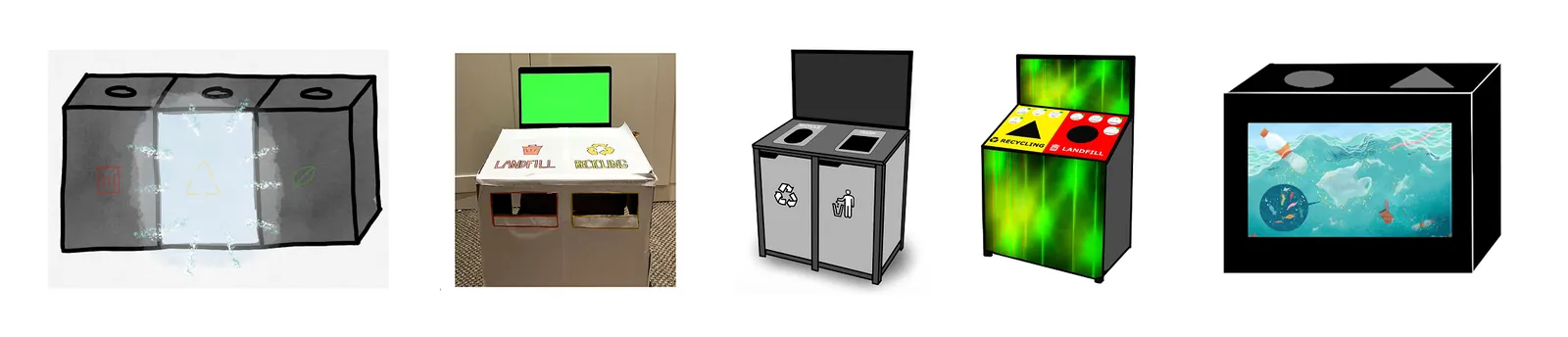
Stage 4 — Final prototype
The final LumiBin was a high-fidelity prototype built with:
- Hardware: RFID‑tagged test items + readers, recycled timber frame, laser‑engraved panels, large screen.
- Software: Unity + AutoHotkey driving a responsive ocean scene; when an item is scanned, fish swim to the correct side (recycling or landfill).
The ocean theme was chosen because plastic pollution in water is a powerful, emotional motivator. When rubbish is scanned, fish visibly swim toward the correct side of the display (recycling or landfill), providing instant, non‑judgemental reinforcement.
Outcomes
- Behaviour change: Users recycled faster and more accurately on repeat attempts.
- User confidence: Participants reported higher confidence after receiving feedback.
- Recognition: LumiBin was showcased as a finalist and received a High Distinction.
“Engaging, fun, and memorable — it made me stop and think.”
Reflection & next steps
What I learned: Small design details like bin-hole shape and icon clarity are as important as big-screen feedback. Effective nudges require speed, clarity, and emotion working together.
If I continued: Replace RFID with camera + machine learning for real-time item recognition, expand themes beyond oceans, and test gamification features to deepen engagement.